Dispatches for the curious. Stuff that's neat.
Friday, October 23, 2026

I'm With Her on stage: Goldmine on the live album Sing Me Alive

Posted by Captain Queso on Friday October 23, 2026 @3:54AM in Folk and Americana
from the three-part-harmony-in-real-time dept.

Fresh off a Grammy for Wild and Clear and Blue, the trio put out a record of what they sound like in a room, which is where three-part harmony either holds or doesn't. Aoife O'Donovan walks through the songs and her recent guest turns. A little older than our usual news, included here simply because it's lovely.

Goldmine reviews Sing Me Alive, a live album drawn from I'm With Her's 2025 concerts, with Aoife O'Donovan talking about tracks including Find My Way to You, Overland and Mother Eagle, and about guesting on records by Sierra Hull and by Alison Brown and Steve Martin.

Fraser and Haas, 25 years in: Strings reviews Meridians

Posted by Captain Queso on Friday October 23, 2026 @3:53AM in Folk and Americana
from the fiddle-meets-cello-meets-quarter-century dept.

Scottish fiddle and cello shouldn't make this much rhythm between them, but Fraser and Haas have been proving otherwise for a quarter of a century. The review singles out Haas's writing, which is worth noticing if you know her mainly as the engine under Fraser's tunes. An August review, here as a bit of decoration.

Strings Magazine reviews Meridians, the duo's seventh album and first since 2021, covering new tunes by both players, from a stirring opener by Haas to a quiet closing piece by Fraser, with medleys and dance sets in between.
Read the rest of this story (Strings Magazine)

Murat Demirbas's notes from HPTS 2026, day one

Posted by Captain Queso on Friday October 23, 2026 @3:30AM in Systems research
from the asilomar-by-the-sea dept.

HPTS is the small, invitation-only workshop where the transaction-processing and storage crowd says what it really thinks, and Murat's trip reports are the next best thing to being there. The disk numbers from Dropbox are the bit to stop on: capacity has outrun bandwidth so far that reading a whole drive now takes about a day and a half.

A day-one write-up from the High Performance Transaction Systems workshop at Asilomar. It covers Ion Stoica on where agent-written software falls short, Todd Lipcon on learned systems, Dropbox on its Magic Pocket storage and the growing gap between drive size and throughput, and Google on Spanner Omni, among other talks.
Read the rest of this story (Metadata (Murat Demirbas))

Irene Zhang makes the case for slow software

Posted by Captain Queso on Friday October 23, 2026 @3:29AM in Systems research
from the measure-twice-commit-once dept.

An argument any kernel maintainer will recognise: the code that everything else depends on deserves the most patience, not the least. Zhang borrows from the slow food movement and ties effort to blast radius, which is a tidy way to say what reviewers have long felt. It is from July, but it has aged into exactly this moment.

Writing on the SIGOPS blog, Irene Zhang argues that fast AI-assisted development has cut the link between how quickly software is built and how much depends on it. She proposes deliberately slowing work on critical infrastructure in proportion to its dependents, while leaving quick tools for prototypes and low-risk code, and uses storage consistency as an example of what can quietly break.
Read the rest of this story (ACM SIGOPS blog)

Kyla Scanlon interviews Austan Goolsbee on vibes versus data

Posted by Captain Queso on Friday October 23, 2026 @3:28AM in Economics
from the feelings-are-not-a-leading-indicator dept.

A central banker explaining, in plain terms, why the numbers and the national mood have stopped agreeing. Scanlon asks the questions you would want asked and lets him think out loud. The low-hire, low-fire labour market is the phrase to remember.

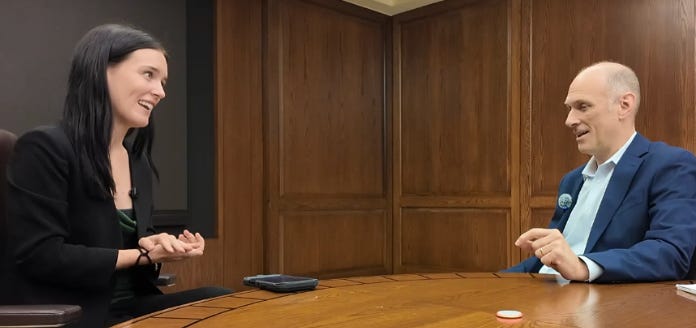
The Chicago Fed president talks about why consumer sentiment has become a weaker guide to spending, what drives people's gloom about prices, the slow-moving jobs market, and whether the AI data-centre boom is a demand shock the Fed needs to watch. The full transcript is free to read.
Read the rest of this story (Kyla Scanlon (Substack))

Crows make decisions about twice as fast as monkeys

Posted by Captain Queso on Friday October 23, 2026 @3:27AM in Birds
from the as-the-crow-thinks dept.

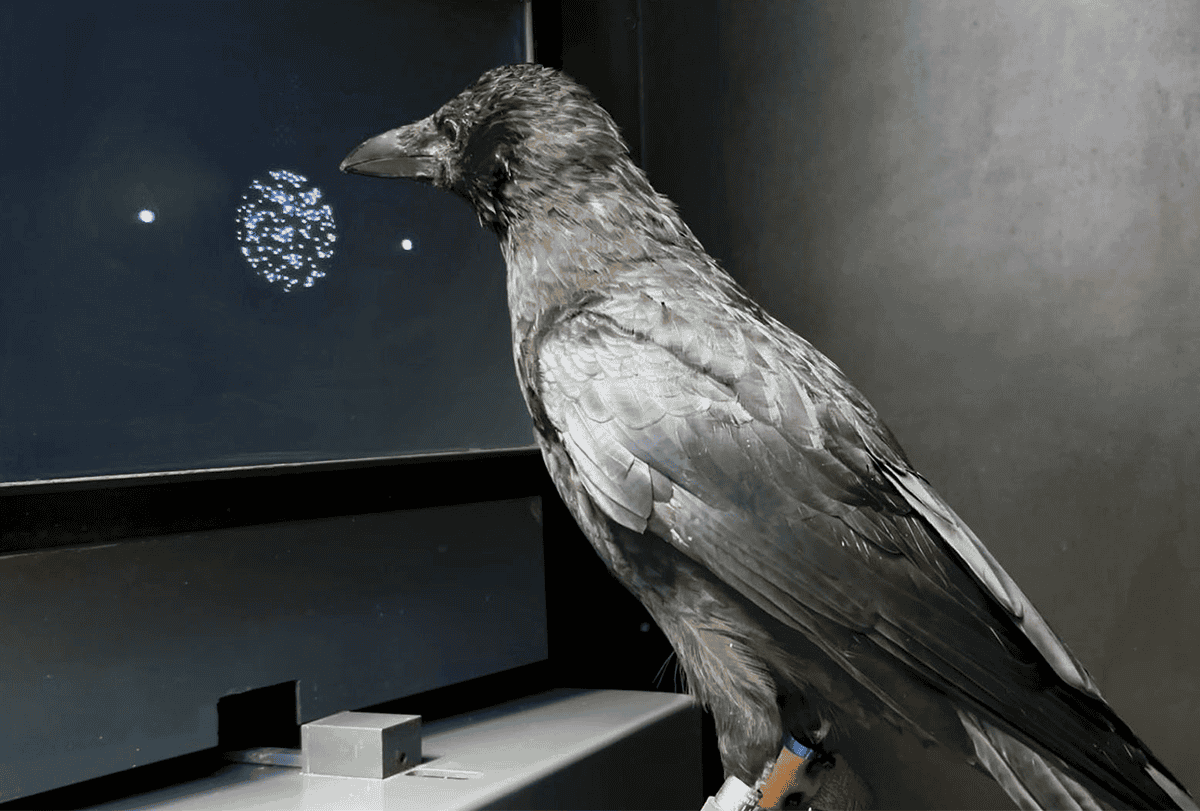
Corvids keep embarrassing the primates. Two carrion crows named Iggy and Lemmy, which is reason enough to read it, beat monkeys handily on a classic perception task, and their neurons gave the game away within 70 milliseconds. The open question of why bird brains run so fast is the fun part.

A study in Science from Andreas Nieder's lab in Tübingen trained carrion crows on a moving-dots decision task and recorded from a brain region that plays a role like the primate prefrontal cortex. The crows answered in about a quarter of a second, roughly twice as quickly as primates, and researchers suggest densely packed neurons, shorter wiring and warmer bodies as possible reasons.
Read the rest of this story (The Transmitter)

Amsterdam's Pianola Museum and its 20,000 paper rolls

Posted by Captain Queso on Friday October 23, 2026 @3:26AM in Places
from the look-ma-no-hands dept.

A Jordaan side street, a room full of self-playing pianos and a library of punched paper rolls: music stored as holes, which is practically a storage format. Volunteers run it, and the tours are by people who love the machines. Bonus history about who once ran a roll factory in the neighbourhood.

A small museum on Westerstraat in Amsterdam's Jordaan holding around fifty player pianos and close to twenty thousand music rolls, from the era when the pianola was a parlour sensation. Atlas Obscura's entry covers the collection, how player pianos work, and the local connection to the building now known as the Anne Frank House.

Brassbound: free LEGO tabletop wargames with Zeppelins

Posted by Captain Queso on Friday October 23, 2026 @3:25AM in LEGO
from the roll-for-initiative-then-snap dept.

Somebody built a whole alternate-history wargame universe on top of LEGO, gave it away, and grew a community that writes fiction and draws art for it. The designer's point that bricks are the perfect prototyping medium will ring true to anyone who has ever hacked something together. The included squadron instructions are a nice touch.

BrickNerd interviews Paul Antoine about Brassbound, a set of free tabletop games played with LEGO models, from Cold War-style ground battles to 1917 air combat at 1:300 scale. He talks about design, the game's Discord community and his favourite unit, and the article includes building instructions for an aircraft squadron.

Why Bennu's boulders don't hold heat: they're full of cracks

Posted by Captain Queso on Friday October 23, 2026 @3:24AM in Space and science news
from the it's-not-the-heat-it's-the-fractures dept.

OSIRIS-REx brought back pieces of Bennu, and now the lab has explained a long-standing puzzle from orbit. It is a good example of sample return earning its keep: you can measure a rock from a spacecraft, but you need it on a bench to see why it behaves the way it does.

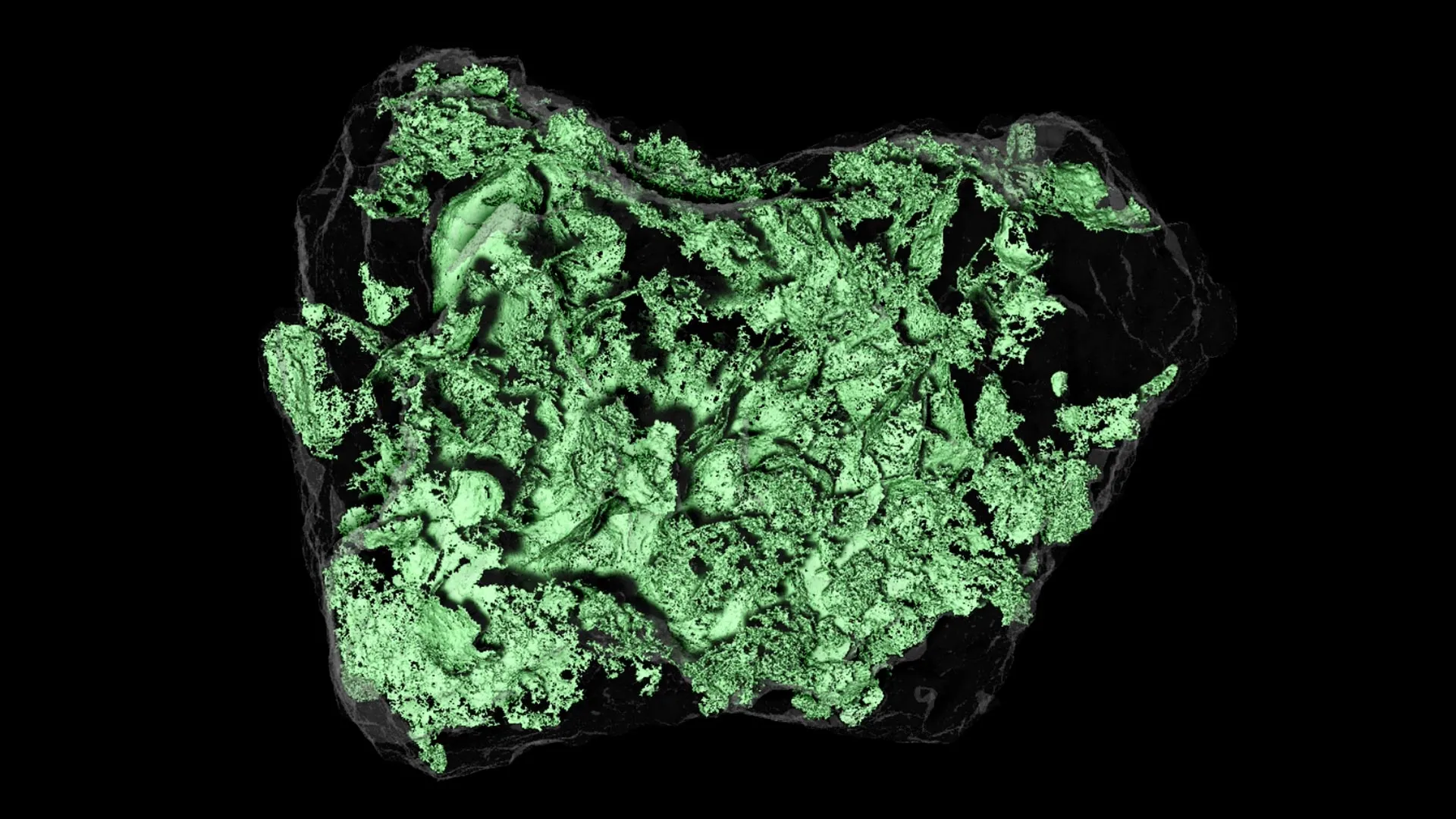
Researchers led from the University of Arizona, working with NASA Johnson and Nagoya University, scanned returned Bennu particles with X-ray CT and thermal imaging. Networks of internal cracks, along with porosity, explain why the asteroid's surface sheds heat so quickly, and simulations built from the scans match what the spacecraft measured. The study appeared in Nature Communications.
Read the rest of this story (ScienceDaily (University of Arizona))

How to read a QR code with a pencil and some patience

Posted by Captain Queso on Friday October 23, 2026 @3:23AM in Wildcard
from the human-barcode-scanner dept.

Strictly useless and completely delightful: decoding QR codes by hand, error correction and all. It is the same pleasure as reading a hex dump, and you come away understanding what the little squares are actually doing. The human-readable QR variant at the end is a fun twist.

Hackaday covers Noel Friedrich's guide to decoding small QR codes on paper, including how to undo the masking and use the error-correction layout, plus a side project that uses that error correction to hide readable text inside a working code.

Flight Software Workshop 2027: JPL hosts, abstracts due 4 December

Posted by Captain Queso on Friday October 23, 2026 @2:50AM in Space and science news
from the no-ITAR-in-the-slides dept.

The one conference where the people who write the code that keeps spacecraft alive compare notes, and the talks go up on YouTube afterwards for the rest of us. Registration just opened and the call for abstracts is live, so if a kernel person ever wanted an excuse to talk to the JPL crowd, this is it.

The 20th workshop on spacecraft flight software runs 22 to 25 March 2027 at Caltech's Ramo Auditorium, hosted by JPL with Aerospace Corporation, SwRI, NASA Goddard and APL. It is talks only, no papers; abstracts of up to 400 words are due 4 December 2026, and themes include architectures, resilience, space networking, DevOps and onboard AI.
Read the rest of this story (Flight Software Workshop)

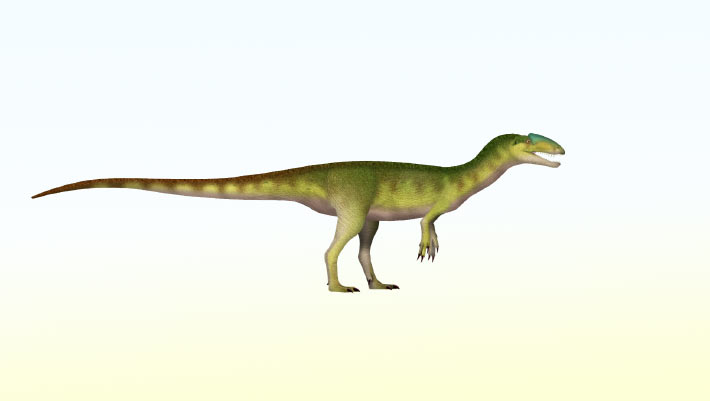
Infernogallus, a parrot-jawed Hell Creek dinosaur that may have eaten fruit

Posted by Captain Queso on Friday October 23, 2026 @2:49AM in Dinosaurs
from the five-a-day-in-the-cretaceous dept.

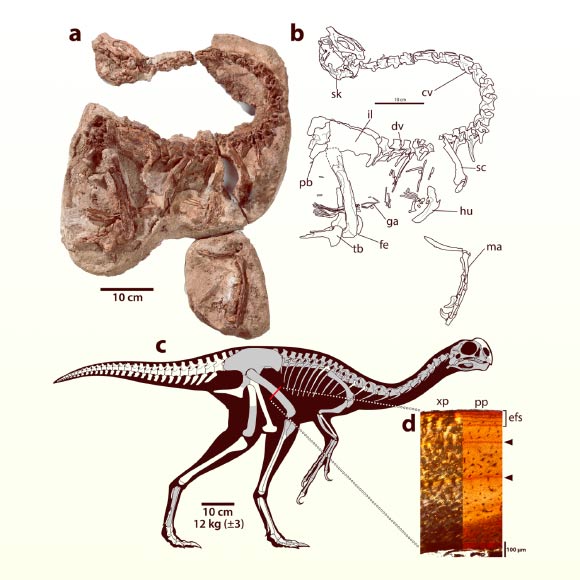
Hell Creek is T. rex country, so it is a nice change to meet a 12 kg neighbour with a weak bite and a sliding jaw that probably preferred fruit. The comparison to a living parrot is the bit that makes it click. Also a reminder that a nearly complete skull can sit in a collection for over a decade before its story gets told.

Researchers describe Infernogallus jamesi, a toothless oviraptorosaur from the very end of the Cretaceous in Montana and the Dakotas, from a near-complete skull collected in 2011. CT reconstructions of its jaw muscles point to a gentle, slicing bite, and with no gizzard stones found, the team argues for a soft, fruit-heavy diet. The paper is in Nature Communications.

A Jurassic bird that had already given up on flying

Posted by Captain Queso on Friday October 23, 2026 @2:48AM in Birds
from the grounded-before-takeoff dept.

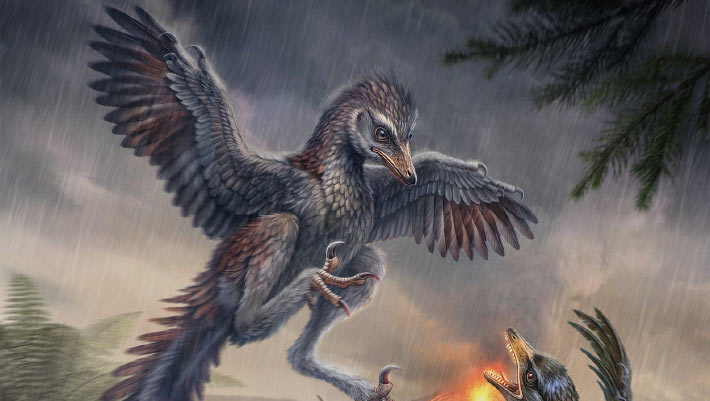
We tend to tell bird evolution as a straight line towards the sky, and this one walks right off that script. Barely past Archaeopteryx on the family tree, it already had stubby arms and runner's legs, plus a raptor-style sickle claw for good measure. Bird science with a dinosaur chaser.

Yuezhuornis yangyuanensis, about 150 million years old from Fujian in southeastern China, sits among the earliest birds but has short forelimbs and limb proportions like modern ground birds, suggesting it could not fly. It also kept serrated teeth and a hyperextensible second toe. The study, by a team including the Institute of Vertebrate Paleontology in Beijing, appeared in Nature.

Kyla Scanlon on the Shrugflation Triangle: oil, AI spending and Treasuries

Posted by Captain Queso on Friday October 23, 2026 @2:47AM in Economics
from the it's-all-connected-man dept.

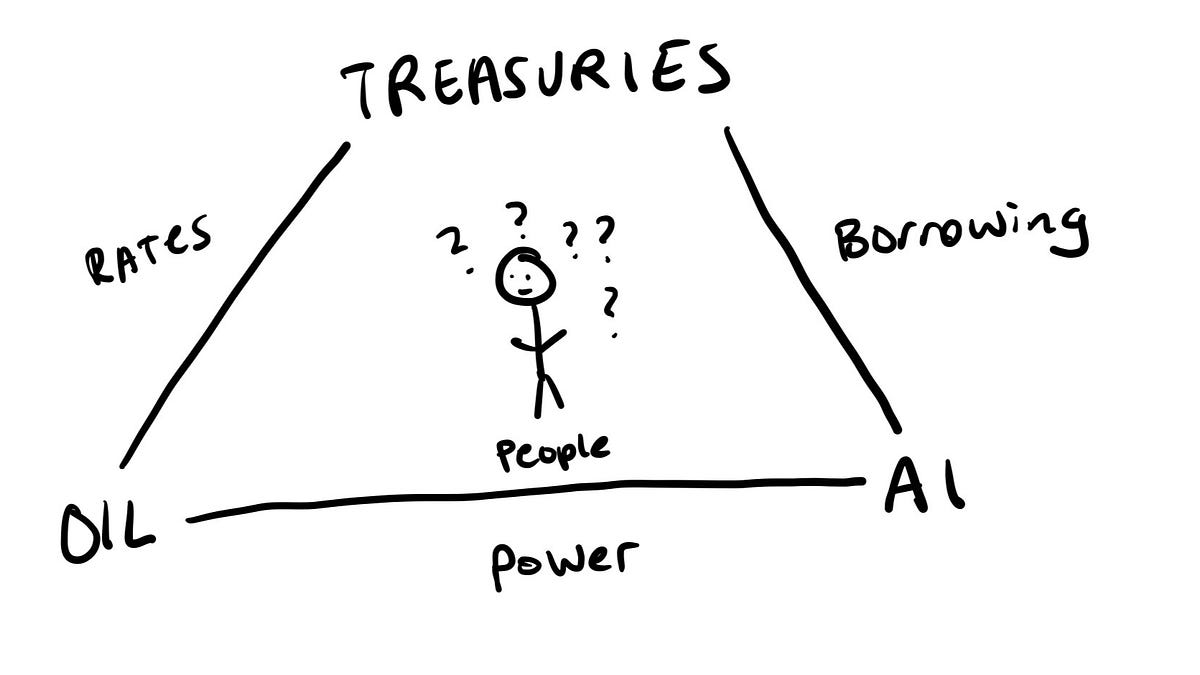
Plenty of people will tell you the economy feels weird; Scanlon actually draws the wiring diagram. The useful idea here is how three separate stories, energy prices, the data-centre building spree and government borrowing, push on each other. Calm, numerate and free to read.

Scanlon argues that higher oil prices, massive borrowing to fund AI infrastructure, and a large federal deficit are feeding into one another through interest rates and Treasury demand, and looks at who ends up carrying the cost. She backs it with recent figures on fuel prices, consumer sentiment, hyperscaler spending and the fiscal year's books.
Read the rest of this story (Kyla Scanlon (Substack))

Louise Bichan's take on the old ballad Greenwood Sidie-o, with Kris Drever

Posted by Captain Queso on Friday October 23, 2026 @2:46AM in Folk and Americana
from the murder-ballads-before-breakfast dept.

An Orkney fiddler, a grim Scottish ballad and a Boston-heavy band of players, which makes it a neat bridge between two of this feed's favourite places. Listen for how the strings carry the story while the voices stay plain. She animated the video herself, too.

Folk Alley premieres the video for Bichan's arrangement of the traditional ballad, with Kris Drever and Rachel Sermanni on vocals and a string section arranged with fiddler Katie McNally. It is the third single from her album Binnorie, due 30 October.

Monet in dark mode: recolouring the LEGO water lilies set

Posted by Captain Queso on Friday October 23, 2026 @2:45AM in LEGO
from the impressionist-tendencies dept.

A builder took LEGO's Monet set and reworked it into a moody night-time palette, then wrote up which part swaps worked and which colours turned out to be liars next to their neighbours. It is a good look at colour theory done in plastic, with a comment from the set's designer about how many bridge colours they tried.

Meredith Najewicz rebuilt the LEGO Art Bridge over a Pond of Water Lilies in dark blue, dark grey and black, inspired by a different Monet canvas. She explains her substitutions, from wedge plates to quarter-round tiles, how she sourced parts, and what she learned about tan versus white highlights.

The first properly green star is a white dwarf full of sodium

Posted by Captain Queso on Friday October 23, 2026 @2:44AM in Space and science news
from the it's-not-easy-being-green dept.

Textbooks insist there are no green stars, and for good physical reasons. This one cheats: it swallowed pieces of its old planetary system, and the sodium they left behind soaks up orange light. The survey also found pink and yellow white dwarfs nearby, so the night sky is a little more colourful than advertised.

University of Warwick astronomers report WD J1330+6435, a white dwarf whose atmosphere, polluted with rocky debris, gives it a chartreuse colour. A survey of 151 nearby white dwarfs found a handful of other odd hues, and the team estimates about one in thirty may look noticeably coloured.
Read the rest of this story (ScienceDaily (University of Warwick))

LTTng and the out-of-tree tracer catch-22, from Plumbers 2026

Posted by Captain Queso on Friday October 23, 2026 @2:43AM in Open source
from the export-symbol-or-bust dept.

Two decades of LTTng, and its maintainer still cannot upstream it piece by piece because the kernel will not export symbols with no in-tree user. Jake Edge's write-up is a fair, detailed look at a real engineering knot rather than a flame war. Anyone who has carried an out-of-tree module will nod along.

At the Linux Plumbers Conference, Mathieu Desnoyers led a session on how LTTng could work better alongside ftrace and perf. The discussion covered the rule against exporting unused symbols, duplicated tracing infrastructure, different ring-buffer needs, and whether a middle path exists between staying out of tree and merging everything at once.

The North Sea's Silverpit Crater really was an asteroid impact

Posted by Captain Queso on Friday October 23, 2026 @2:42AM in Wildcard
from the oil-well-cuttings-never-lie dept.

A buried crater off the English coast that geologists voted against in 2009 turns out to be the real thing after all. The clinching evidence came from shocked quartz in old oil-well rock cuttings, which is a lovely example of industrial leftovers settling a scientific argument. Close enough to the Dutch coast to count as neighbourhood news, give or take 45 million years.

Researchers led by Uisdean Nicholson at Heriot-Watt University present several lines of evidence that the 3 km Silverpit Crater, 700 m below the seabed, was made by an asteroid around 160 m across some 43 to 46 million years ago. Simulations suggest the impact threw up a curtain of rock and water and a tsunami more than 100 m high.
Read the rest of this story (ScienceDaily (Heriot-Watt University))

Quick Build: a T-rex speeder bike, with free instructions

Posted by Captain Queso on Friday October 23, 2026 @1:50AM in LEGO
from the jurassic-parking dept.

Two of this feed's favourite things in one small build: a speeder bike wearing a tyrannosaur as a body kit. It is compact enough to actually build this weekend, and the write-up explains the pipe-frame trick underneath. The final jaw detail left out of the instructions is the kind of nerdy footnote worth reading for.

Builder Dan Ko made this dinosaur-styled speeder for a community space-building challenge and shares an 18-step guide, a parts list you can load into BrickLink or Stud.io, and a separate display stand. It belongs to a running fan-made faction that started in a LEGO space Discord.

Tooth marks suggest small raptors scavenged a dead young tyrannosaur

Posted by Captain Queso on Friday October 23, 2026 @1:49AM in Dinosaurs
from the leftovers-again dept.

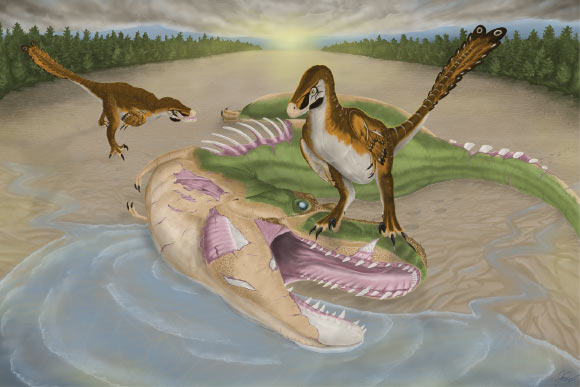
Forensic palaeontology at its finest: researchers measured serration spacing in bite marks, corrected for the angle of the bite, and named a likely suspect. The size gap makes the case, since a turkey-sized raptor was not taking down a half-tonne tyrannosaur, but it would happily clean up after one.

A jaw from a young Albertosaurus, about 70 million years old from Alberta, carries scrape marks matching the teeth of the dromaeosaur Atrociraptor. At an estimated 16 to 18 kilograms against roughly 530, the biter was probably feeding on a carcass rather than hunting. The study appeared in the Journal of Paleontology this month.

One small vertebra may be the oldest dinosaur from Iberia

Posted by Captain Queso on Friday October 23, 2026 @1:48AM in Dinosaurs
from the back-bone-of-the-algarve dept.

Not every dinosaur find is a skeleton; sometimes it is one 37 mm bone that moves a timeline by tens of millions of years. Worth noticing how much careful phylogenetic work can hang on a single centrum, and how honest the authors are about not naming it.

A vertebra from Late Triassic rocks near Loulé in southern Portugal, over 220 million years old, is the first Triassic dinosaur material from the Iberian Peninsula. Analysis places it among early neotheropods, closest to England's Sarcosaurus, but the bone is too incomplete to name a new species.

Perseverance passes Opportunity to become the longest-driving off-world rover

Posted by Captain Queso on Friday October 23, 2026 @1:47AM in Space and science news
from the are-we-there-yet dept.

Opportunity's distance record stood as a monument to plucky persistence; Perseverance matched it in about a third of the time. The interesting part is why: the rover drove itself with autonomous navigation for over 90 percent of the trip. A nice milestone for onboard software as much as wheels.

On 11 October the rover's odometer reached about 45.2 km, edging past Opportunity's long-held total. It has also overtaken the Apollo 17 lunar rover and the Soviet Lunokhod 2, and it begins an extended mission running to roughly the end of 2028 with 29 samples collected so far.

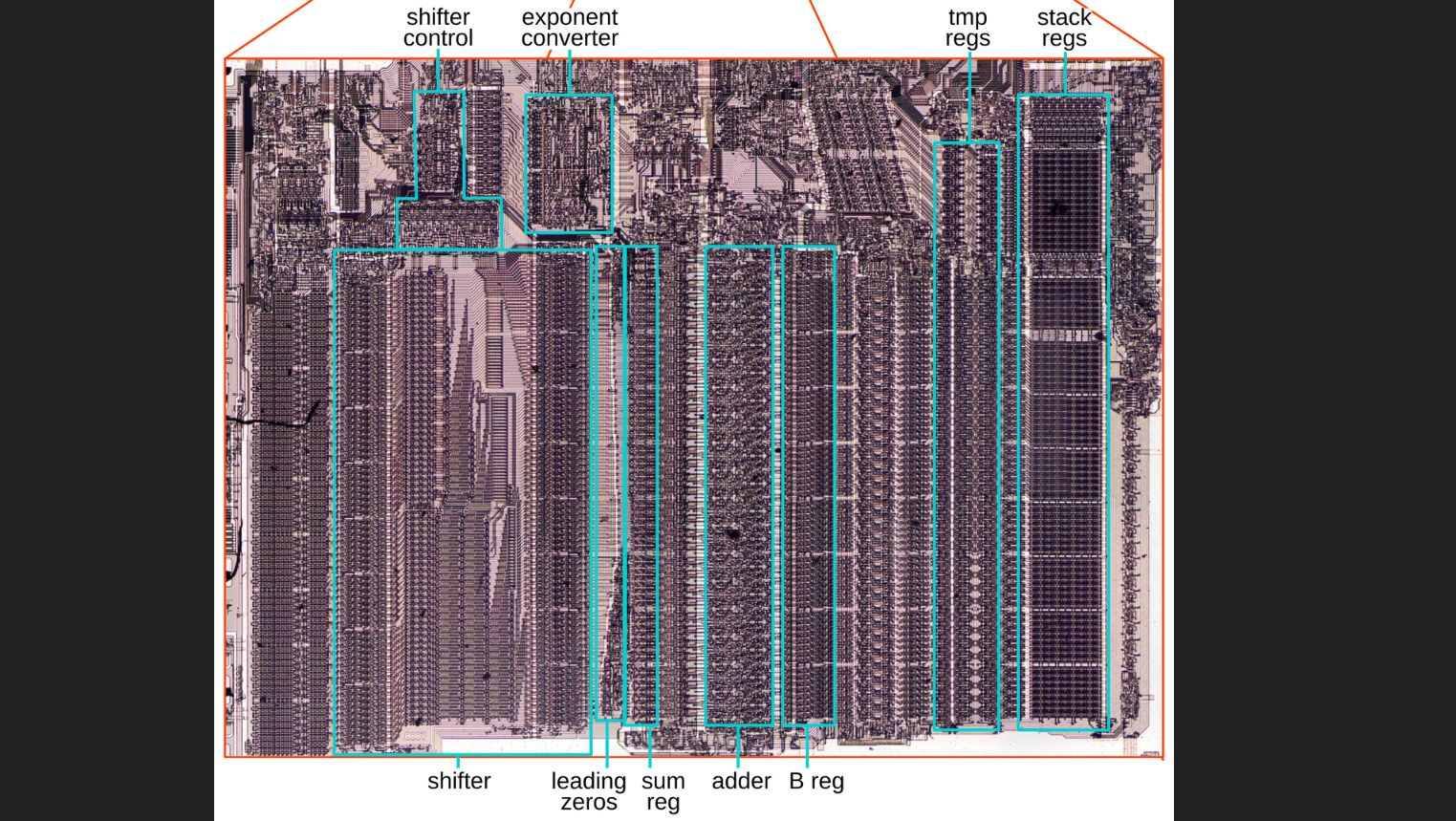
Inside the Intel 8087: how the first PC FPU adds and subtracts

Posted by Captain Queso on Friday October 23, 2026 @1:46AM in Wildcard
from the carry-the-one dept.

Ken Shirriff is back at the die photos, this time walking through the 8087's add and subtract microcode line by line. Systems people will enjoy the two-pass normalisation scheme and the candid description of the special-case handling as spaghetti. It is a reminder that IEEE floating point was hard-won silicon before it was a standard.

Using images of the chip and an extracted microcode ROM, the article traces how the 8087 handles 80-bit numbers through a wide integer adder, shifters and leading-zero detection, and how its microcode branches through the many edge cases floating-point arithmetic requires.
Read the rest of this story (Ken Shirriff's blog)

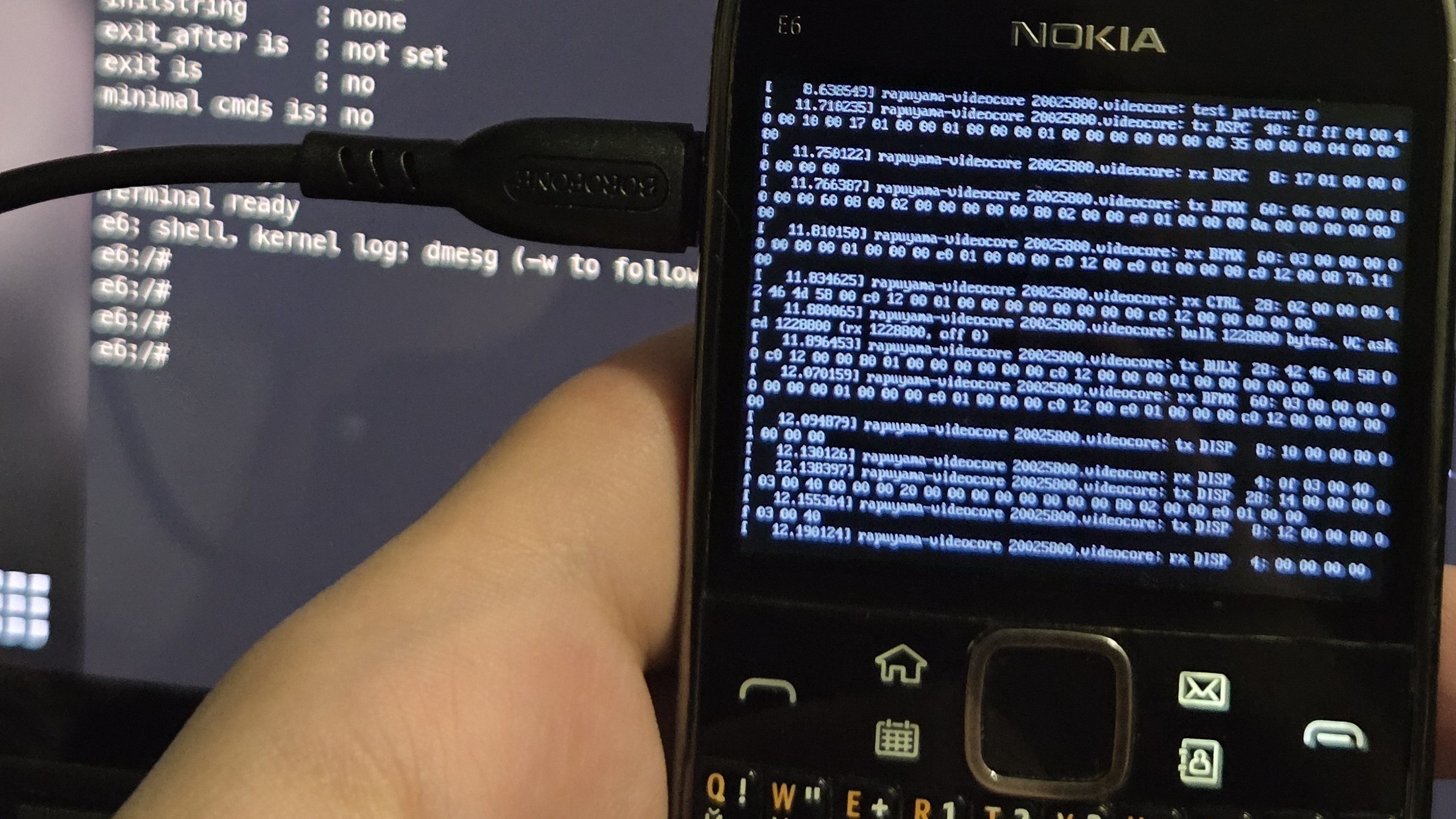
Booting Linux on a Nokia E6 by hijacking Symbian at runtime

Posted by Captain Queso on Friday October 23, 2026 @1:45AM in Open source
from the connecting-people-to-busybox dept.

Pure late-90s energy: no unlocked bootloader, so a Symbian app loads a kernel, switches off the MMU and jumps. The display works by replaying messages sniffed from Nokia's own driver. The open puzzle, a mystery reset a few minutes after boot that may be the baseband watching over things, is the kind of bug kernel people lose weekends to.

A hobby project bringing a modern Linux 6.12 kernel up on the Nokia E6, an ARM11 phone from 2011. It boots to a BusyBox shell with the screen, keyboard and touchscreen working, and the repo includes build steps and detailed notes on the reset problem still being chased.

Five lost birds found again, including a Bismarck kingfisher

Posted by Captain Queso on Friday October 23, 2026 @1:44AM in Birds
from the found-in-the-forest-not-the-feed dept.

A properly hopeful bird story from the neighbourhood: every rediscovery here is from the Philippines, Indonesian Papua or Papua New Guinea. Each came from patient local birders and guides with a camera rather than a big expedition, which a solo birder may find encouraging.

The latest update to the Lost Birds List records five species photographed again in 2025 after gaps of a decade or more, among them the Bismarck kingfisher, the Sulu cuckooshrike and the rufous-breasted blue flycatcher. The list of lost birds has shrunk from 163 in 2022 to 120.

A solar storm, a delayed train, and a date that was off by seven years

Posted by Captain Queso on Friday October 23, 2026 @1:43AM in Space and science news
from the wrong-kind-of-sun-on-the-line dept.

A cosy detective story: one of the earliest recorded cases of space weather affecting technology turned out to be dated before the railway in question existed. Physicists checked timetables and magnetometer records like historians, and the case closes neatly.

A 16-minute train delay near Exeter, blamed on telegraph disruption from a geomagnetic storm, was long dated to 1841. Researchers led by Lancaster's Jim Wild found the line did not open until 1846 and place the event in October 1848 instead, with an 1847 Midland Railway report as the earliest credible case.
Read the rest of this story (Lancaster University)

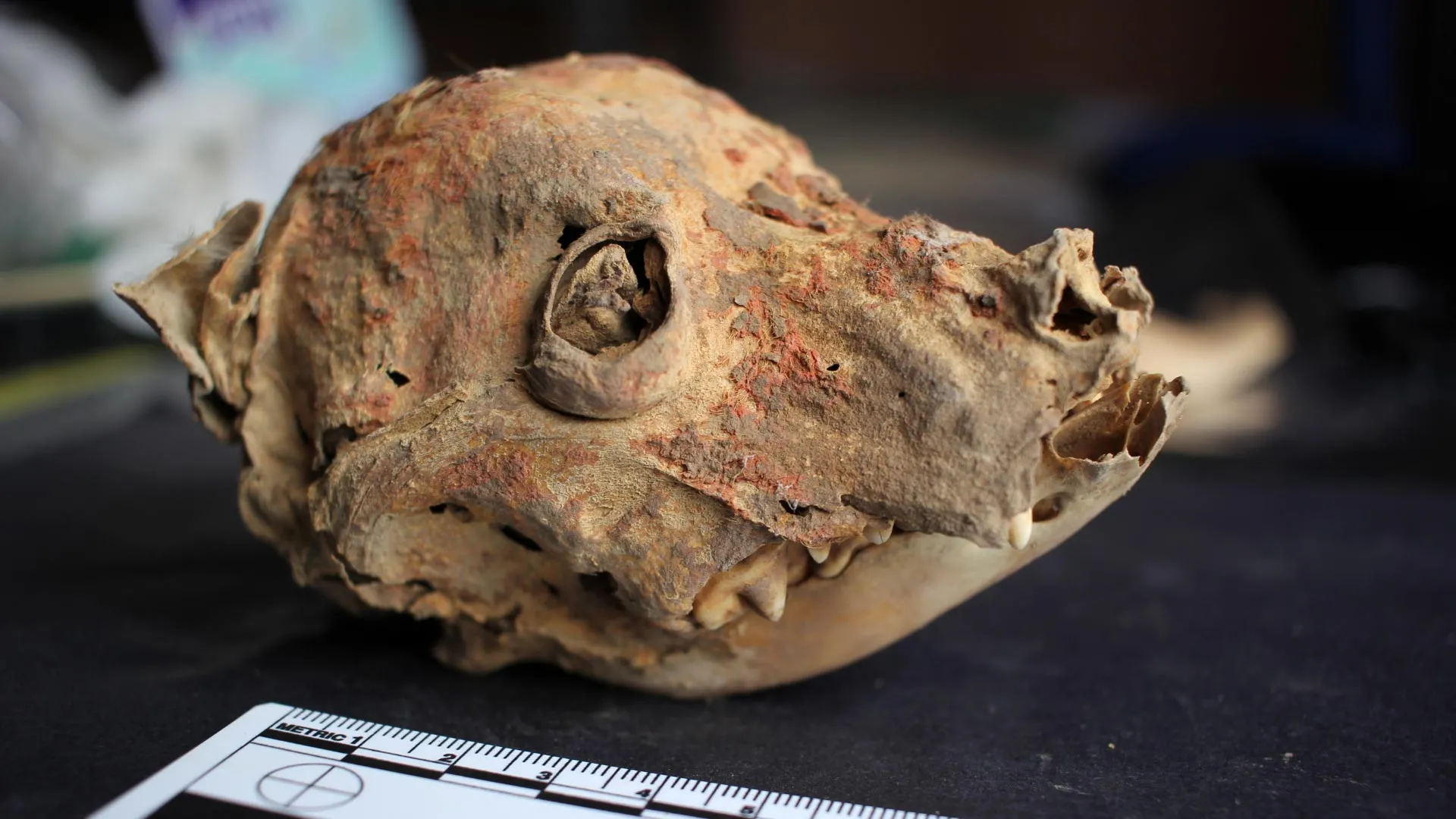
A 1,200-year-old mummified hairless dog from Peru

Posted by Captain Queso on Friday October 23, 2026 @1:42AM in Wildcard
from the good-boy-of-the-wari dept.

Archaeology with a wagging tail. The clever detail is that hairless dogs lack certain teeth because of the same gene, so even bare bones can reveal the breed. The diet results suggest these pups were fed more like children than like the other dogs.

Excavations at Castillo de Huarmey, a Wari-era site north of Lima, turned up remains of at least 19 dogs and a naturally mummified one, identified as Peruvian hairless dogs. Some puppies were buried with high-status people, and chemical analysis of their bones hints at deliberate breeding and special care.
Read the rest of this story (ScienceDaily (Dartmouth College))

A megaraptor in a museum drawer: Britain's first long-clawed predator, a century late

Posted by Captain Queso on Friday October 23, 2026 @1:17AM in Dinosaurs
from the filed-under-misc dept.

Proof that the best fieldwork sometimes happens in a storeroom. A scrap of skull the museum bought in 1924 turns out to be the first megaraptoran ever found in Europe, which redraws the map for a whole family of big-clawed hunters. Bonus points for a name that translates as unconquered female warrior.

Researchers from UCL and the Natural History Museum have named Invictibellatrix amberina from a partial skull collected on the Isle of Wight by amateur collector Reginald Hooley. The animal lived about 120 million years ago and was roughly 3 to 4 metres long. The find suggests megaraptorans ranged widely early on, then faded out in the northern continents while their southern cousins became top predators.
Read the rest of this story (Natural History Museum)

New ghosts turn up beside the Ghosts of Cassiopeia

Posted by Captain Queso on Friday October 23, 2026 @1:16AM in Space and science news
from the who-you-gonna-call dept.

Amateur astronomers pointed a telescope at a well-photographed patch of sky for about a hundred hours and found things nobody had catalogued. Fitting timing for late October. Look for the faint blue wisps; those are the new arrivals.

The 21 October Astronomy Picture of the Day shows the nebulae IC 59 and IC 63 near the bright star Gamma Cassiopeiae, plus three newly spotted faint clouds glowing in ionised oxygen. One may be gas piled up in a bow shock as the star ploughs through space, and another could be a planetary nebula if a white dwarf is found at its centre.

The UNIX v4 tape that was hiding in a Utah storage room

Posted by Captain Queso on Friday October 23, 2026 @1:15AM in Wildcard
from the rm-rf-the-closet-carefully dept.

Every kernel hacker's archaeology dream: someone cleans out a room and finds a nine-track reel labelled with what may be the only surviving copy of Fourth Edition UNIX, the first one mostly rewritten in C. The story is worth it for the reminder of how much of our history lives on fragile media in forgotten cupboards.

A research associate in the University of Utah's Flux Research Group found the 1970s tape while clearing out a storage room in 2025. The team arranged to take it to the Computer History Museum for careful reading, noting that the hardware is scarce and old reels were often reused, so success was not guaranteed.
Read the rest of this story (University of Utah (@theU))

The helmeted hornbill, Malaysia's head-butting, cackling forest giant

Posted by Captain Queso on Friday October 23, 2026 @1:14AM in Birds
from the casque-and-effect dept.

A local bird with a solid-ivory battering ram on its face and a call that speeds up into maniacal laughter audible kilometres away. The section on males jousting in mid-air is the highlight. Also worth noticing the Malay folk name, which hints at what people thought that laugh sounded like.

The helmeted hornbill lives in lowland forests from southern Myanmar and Thailand through the Malay Peninsula, Sumatra and Borneo. Unlike other hornbills its casque is nearly solid, and males use it to ram rivals in flight. Demand for that casque has driven heavy poaching, and the species has been listed as Critically Endangered since 2015.

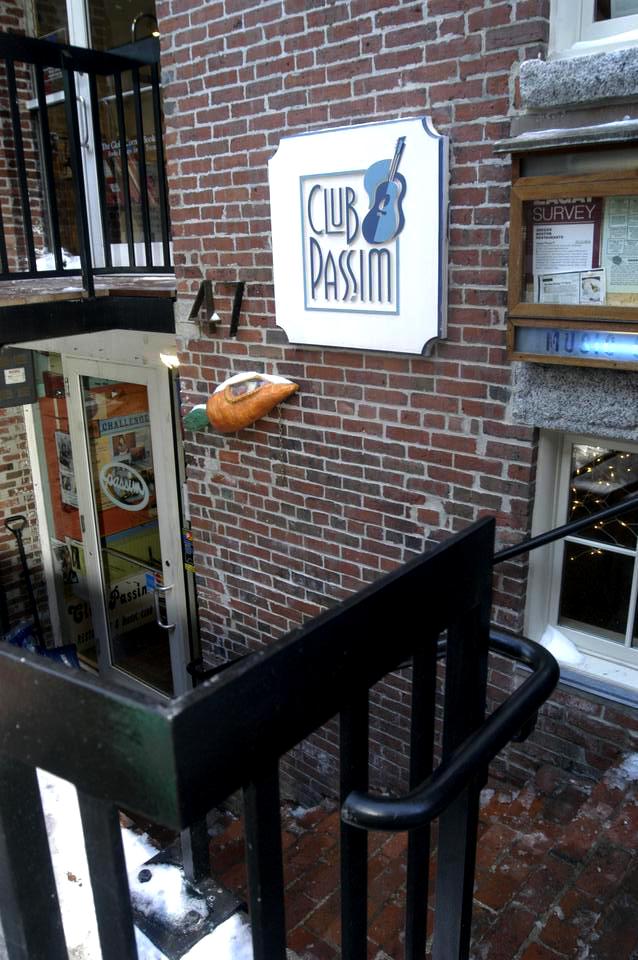
How a Mt. Auburn Street coffeehouse became Club Passim

Posted by Captain Queso on Friday October 23, 2026 @1:13AM in Boston and New England
from the here-and-there-and-everywhere dept.

A short, affectionate history of the Cambridge room where the folk revival got a lot of its early practice. Dylan sneaking in between sets and old blues masters being brought north are the famous bits; the more charming one is how a gift shop slowly turned back into a stage.

The Crimson traces Club 47 from its 1958 opening on Mt. Auburn Street, through its move to Palmer Street and its 1968 closure, to its rebirth under new owners as Passim, named for the Latin word for here and there. It ends with the club as a nonprofit still running open mics and concerts.
Read the rest of this story (The Harvard Crimson)

Tide-predicting machines: Kelvin's brass Fourier computers

Posted by Captain Queso on Friday October 23, 2026 @1:12AM in Wildcard
from the analog-before-it-was-cool dept.

Before anyone had a stored program, people were summing sine waves with pulleys and a wire to print a year of tides in under half an hour. It is a lovely piece of special-purpose hardware, and the American one, nicknamed Old Brass Brains, stayed in service into the 1960s.

Starting with William Thomson's 1872 design, these mechanical analog computers added up many tidal components, each set by gears turning at its own rate, to draw future tide curves for a port. Dozens were built worldwide, and they were used for jobs as serious as planning the D-Day landings.