Dispatches for the curious. Stuff that's neat.
Section: Wildcard
Friday, October 23, 2026

How to read a QR code with a pencil and some patience

Posted by Captain Queso on Friday October 23, 2026 @3:23AM in Wildcard
from the human-barcode-scanner dept.

Strictly useless and completely delightful: decoding QR codes by hand, error correction and all. It is the same pleasure as reading a hex dump, and you come away understanding what the little squares are actually doing. The human-readable QR variant at the end is a fun twist.

Hackaday covers Noel Friedrich's guide to decoding small QR codes on paper, including how to undo the masking and use the error-correction layout, plus a side project that uses that error correction to hide readable text inside a working code.

The North Sea's Silverpit Crater really was an asteroid impact

Posted by Captain Queso on Friday October 23, 2026 @2:42AM in Wildcard
from the oil-well-cuttings-never-lie dept.

A buried crater off the English coast that geologists voted against in 2009 turns out to be the real thing after all. The clinching evidence came from shocked quartz in old oil-well rock cuttings, which is a lovely example of industrial leftovers settling a scientific argument. Close enough to the Dutch coast to count as neighbourhood news, give or take 45 million years.

Researchers led by Uisdean Nicholson at Heriot-Watt University present several lines of evidence that the 3 km Silverpit Crater, 700 m below the seabed, was made by an asteroid around 160 m across some 43 to 46 million years ago. Simulations suggest the impact threw up a curtain of rock and water and a tsunami more than 100 m high.
Read the rest of this story (ScienceDaily (Heriot-Watt University))

Inside the Intel 8087: how the first PC FPU adds and subtracts

Posted by Captain Queso on Friday October 23, 2026 @1:46AM in Wildcard
from the carry-the-one dept.

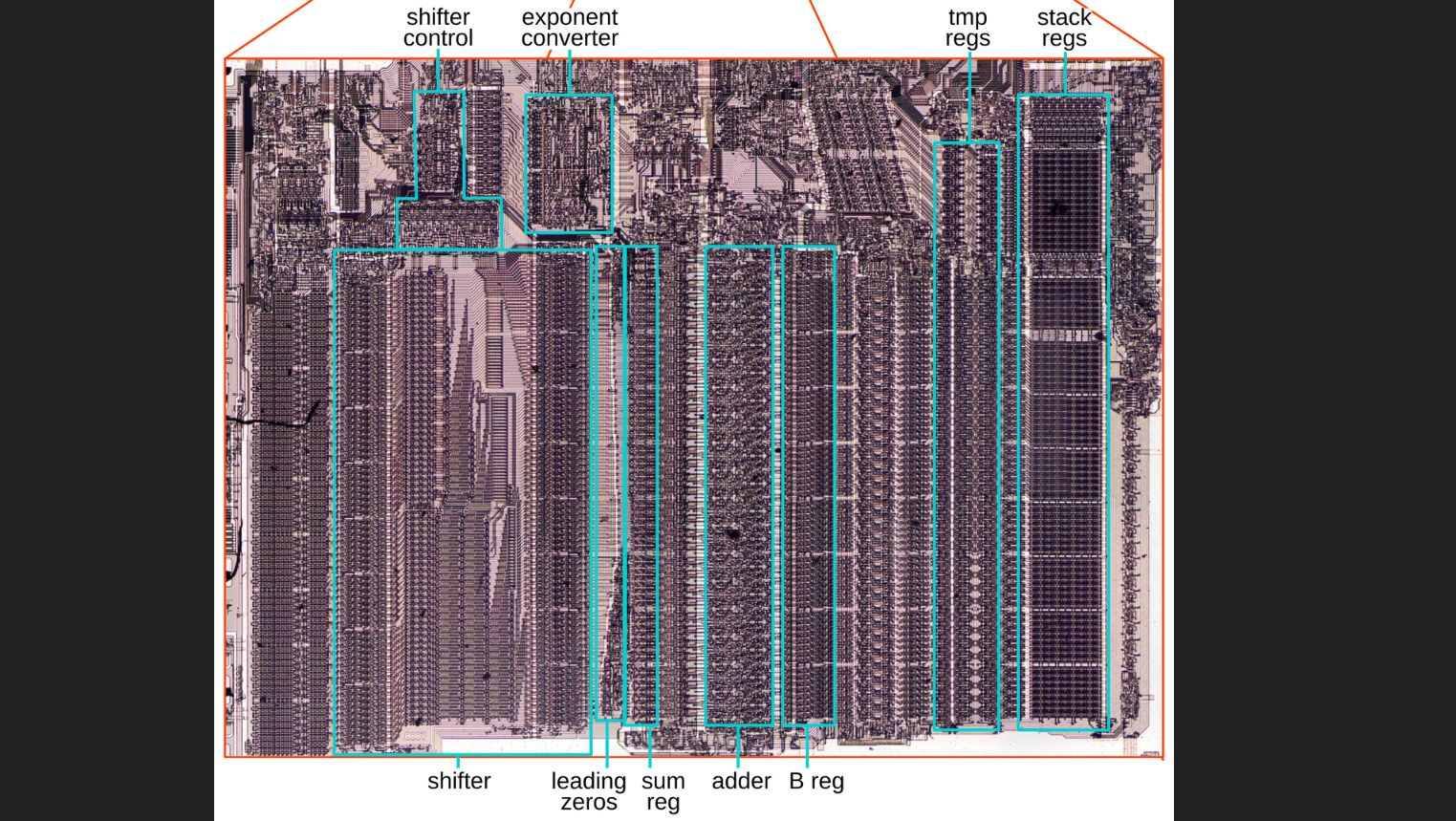
Ken Shirriff is back at the die photos, this time walking through the 8087's add and subtract microcode line by line. Systems people will enjoy the two-pass normalisation scheme and the candid description of the special-case handling as spaghetti. It is a reminder that IEEE floating point was hard-won silicon before it was a standard.

Using images of the chip and an extracted microcode ROM, the article traces how the 8087 handles 80-bit numbers through a wide integer adder, shifters and leading-zero detection, and how its microcode branches through the many edge cases floating-point arithmetic requires.
Read the rest of this story (Ken Shirriff's blog)

A 1,200-year-old mummified hairless dog from Peru

Posted by Captain Queso on Friday October 23, 2026 @1:42AM in Wildcard
from the good-boy-of-the-wari dept.

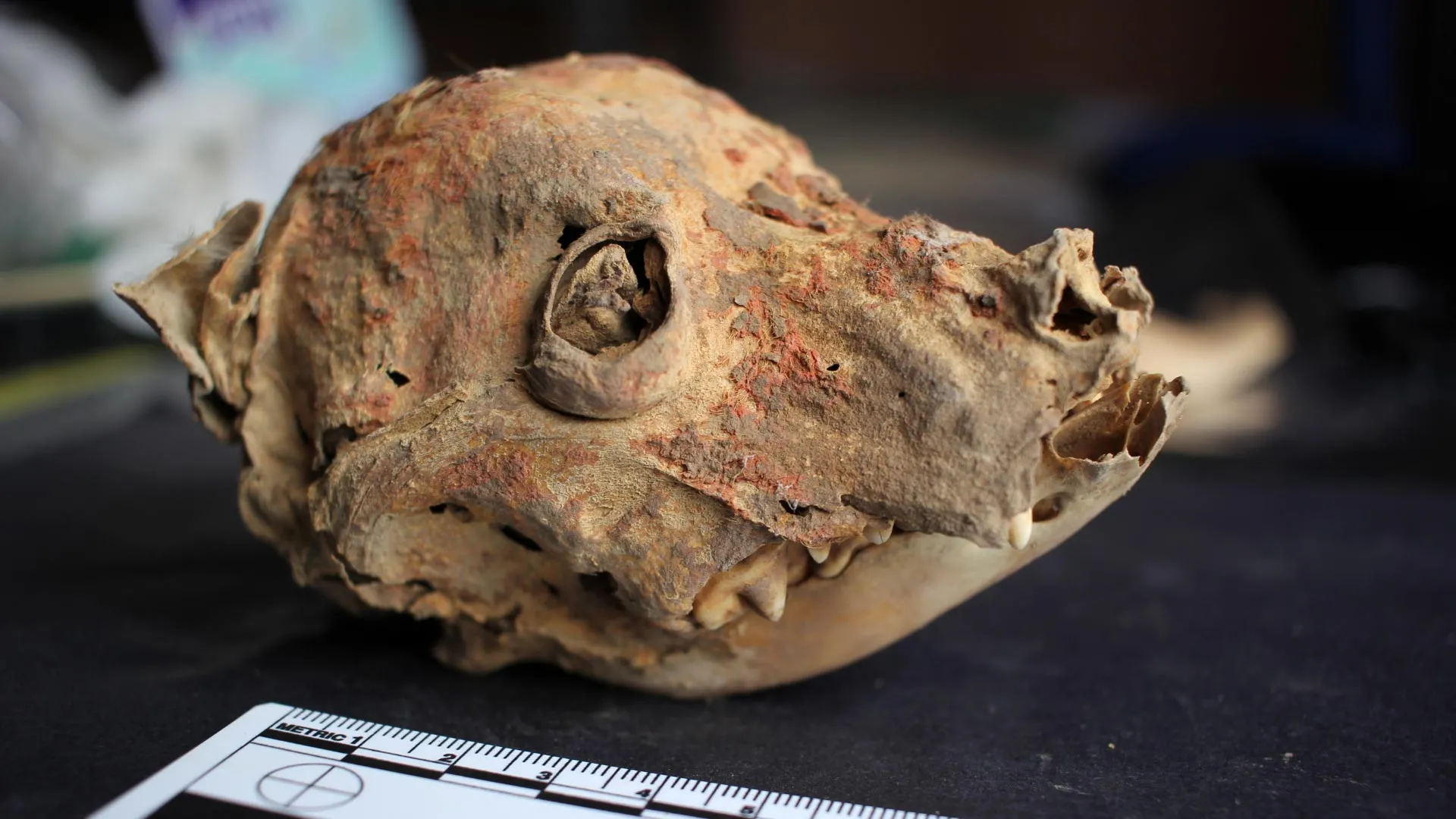
Archaeology with a wagging tail. The clever detail is that hairless dogs lack certain teeth because of the same gene, so even bare bones can reveal the breed. The diet results suggest these pups were fed more like children than like the other dogs.

Excavations at Castillo de Huarmey, a Wari-era site north of Lima, turned up remains of at least 19 dogs and a naturally mummified one, identified as Peruvian hairless dogs. Some puppies were buried with high-status people, and chemical analysis of their bones hints at deliberate breeding and special care.
Read the rest of this story (ScienceDaily (Dartmouth College))

The UNIX v4 tape that was hiding in a Utah storage room

Posted by Captain Queso on Friday October 23, 2026 @1:15AM in Wildcard
from the rm-rf-the-closet-carefully dept.

Every kernel hacker's archaeology dream: someone cleans out a room and finds a nine-track reel labelled with what may be the only surviving copy of Fourth Edition UNIX, the first one mostly rewritten in C. The story is worth it for the reminder of how much of our history lives on fragile media in forgotten cupboards.

A research associate in the University of Utah's Flux Research Group found the 1970s tape while clearing out a storage room in 2025. The team arranged to take it to the Computer History Museum for careful reading, noting that the hardware is scarce and old reels were often reused, so success was not guaranteed.
Read the rest of this story (University of Utah (@theU))

Tide-predicting machines: Kelvin's brass Fourier computers

Posted by Captain Queso on Friday October 23, 2026 @1:12AM in Wildcard
from the analog-before-it-was-cool dept.

Before anyone had a stored program, people were summing sine waves with pulleys and a wire to print a year of tides in under half an hour. It is a lovely piece of special-purpose hardware, and the American one, nicknamed Old Brass Brains, stayed in service into the 1960s.

Starting with William Thomson's 1872 design, these mechanical analog computers added up many tidal components, each set by gears turning at its own rate, to draw future tide curves for a port. Dozens were built worldwide, and they were used for jobs as serious as planning the D-Day landings.